
Millions of Arab expatriates and diaspora communities living abroad face a complex linguistic and psychological dilemma when deciding to reconnect with their cultural roots or pass their heritage down to their children. This dilemma boils down to a timeless question: “Which Arabic should we learn?” The Arabic language is not a monolithic entity; rather, it is a unique linguistic system characterized by Diglossia, a phenomenon where two distinct levels of the language coexist simultaneously: the stable, formal Modern Standard Arabic, and hundreds of rapidly mutating local dialects.
For an expat living in a Western environment dominated by languages like English or French, scattering educational efforts across multiple branches of a language can quickly lead to frustration and burnout. Therefore, understanding the scientific, professional, and cultural dimensions of each linguistic path is the essential first step to ensuring your time and financial investments are directed into the right channel.
In this exclusive, SEO-optimized guide engineered according to the latest content standards, we systematically dissect the core differences between learning Modern Standard Arabic and acquiring colloquial dialects. We provide a clear strategic roadmap that empowers expatriates to achieve true fluency and build an unbreakable connection with their ancestral homelands.
1. Modern Standard Arabic (Fusha): The Universal Passport and Cultural Depth
Modern Standard Arabic represents the singular, universal bond that unites more than 450 million Arabic speakers across the globe. It is the language of official administration, education, mass media, literature, and religious worship.
When an expatriate focuses their energy on learning Modern Standard Arabic, they acquire a massive suite of strategic advantages that local street dialects simply cannot provide:
-
Global Universality: Fusha empowers you to communicate effortlessly with any educated individual from Morocco to Oman, completely shattering geographic and regional barriers.
-
Preserving Religious and Cultural Identity: Fusha is the definitive key to reading and understanding the Holy Qur’an, prophetic traditions, and the vast treasure trove of classical Islamic and Arabic intellectual philosophy—the ultimate goal for most diaspora families.
-
High Professional and Diplomatic Value: International corporations, diplomatic bodies, and global non-governmental organizations actively seek out professionals who master formal Arabic in reading, writing, and speaking to manage official reports, legal translations, and high-level negotiations.
The international community continuously reaffirms the sovereign and civilizational value of formal Arabic as a cornerstone of global cultural diversity. To review official international reports and global initiatives supporting the preservation and empowerment of the language in contemporary societies, you can explore the official portal of UNESCO.
2. Colloquial Dialects (Ammiya): The Language of the Street and Emotional Bonding
On the other side of the spectrum lie the colloquial dialects, which evolve naturally and organically within localized communities (such as Levantine, Egyptian, Gulf, and Maghrebi dialects). Ammiya is the language of immediate emotion, family dynamics, everyday grocery shopping, contemporary music, and television dramas.
Colloquial dialects are characterized by:
-
Immediate Everyday Utility: If an expat’s educational goal is strictly confined to chatting with grandparents during a brief annual summer vacation, a local dialect offers the shortest route to basic emotional connection.
-
Grammatical Flexibility and Simplicity: Over centuries, dialects have shed rigid grammatical cases, complex conjugation patterns, and formal syntax rules, making them appear easier to mimic in casual, unscripted environments.
However, the fatal flaw of relying solely on a colloquial dialect is its extreme geographic limitation. An expat who learns the Tunisian dialect, for example, will face immense difficulty understanding a native Iraqi or conversing smoothly with a Gulf national. Furthermore, dialects lack standardized spelling and are never used to draft legal documents, formal news, or academic curriculums. Advanced linguistic research in top-tier universities heavily explores how this linguistic split affects cognitive development; to review advanced academic studies on sociolinguistics and heritage language acquisition for immigrant communities, you can browse the research papers available via Harvard University.
See also
3. Analytical Comparison Matrix: Modern Standard Arabic vs. Colloquial Dialects
The following table provides a comprehensive structural analysis to help expatriates prioritize their language-learning goals based on their personal and professional aspirations:
| Metric for Comparison | Learning Modern Standard Arabic (Fusha) | Colloquial Dialects (Ammiya) |
| Geographical Reach & Use | Universal across 22 Arab nations, international organizations, and global media. | Localized; confined to a specific country or a narrow regional territory. |
| Literacy & Writing | The exclusive register for books, newspapers, legal documents, and digital content. | Lacks standardized orthography; used primarily for spoken dialogue or casual texting. |
| Sustainability & Future Value | Morphologically stable over centuries; unlocks academic research and high-paying careers. | Highly mutable; changes rapidly between generations and absorbs foreign loanwords easily. |
| Identity & Scriptural Link | Direct, absolute connection to Islamic heritage, classical text, and Qur’anic literacy. | Localized social connection; completely inadequate for reading classical literature or scripture. |
| Cognitive Cost of Learning | Requires structural commitment to mastering the root-and-pattern system. | Relies on surface-level auditory mimicry without structured grammatical rules. |
Linguistic data published by academic press houses indicates that students who establish their foundation in formal Arabic exhibit a twofold increase in their cognitive capacity to absorb any local dialect later on compared to those who attempt the reverse. To follow contemporary statistics and methodology textbooks explaining the psychology of second-language acquisition, you can review the latest publications from Cambridge University Press.
4. Why “Fusha First” is the Smarter Strategic Investment for Expats
Many diaspora parents commit a strategic error by focusing exclusively on teaching their children the local dialect of their home country. As the child grows into a young professional in a globalized economy, they quickly realize that their street dialect does not help them write a professional resume, read an Arabic business proposal, or qualify for high-earning positions as legal, political, or economic consultants in the Middle East.
Therefore, prioritizing learning Modern Standard Arabic yields a highly sustainable cultural and professional return on investment. Fusha constructs a highly logical, mathematical framework inside the human brain based on the “Root and Pattern” ($Root\,and\,Pattern$) system. Once the expat’s mind assimilates this structural matrix, they can easily deconstruct, decode, and master any local spoken dialect within a matter of weeks through natural auditory immersion.
5. From Confusion to Fluency: How “Talaqqi Al-Quran” Empowers Expats
While universities publish abstract theories on diglossia and review platforms like Goodreads are packed with textbooks explaining linguistic registers, expatriates on the ground need a practical, real-world framework that delivers results. The single greatest obstacle facing diaspora communities is the complete absence of a natural Arabic immersion environment and a lack of qualified tutors who can blend the purity of formal Arabic with modern, conversational fluidity.
If you are determined to bypass years of fragmented self-study and choose the fastest, most practical educational track that guarantees absolute confidence in speaking pristine Arabic, your journey must start with native specialists. You can explore customized linguistic programs designed specifically for expatriates and review their deep instructional features by visiting the educational services of the Talaqqi Al-Quran platform.
The platform delivers smart, operational learning solutions engineered to seamlessly integrate into the hectic lifestyles of expats across Europe, the Americas, and beyond:
-
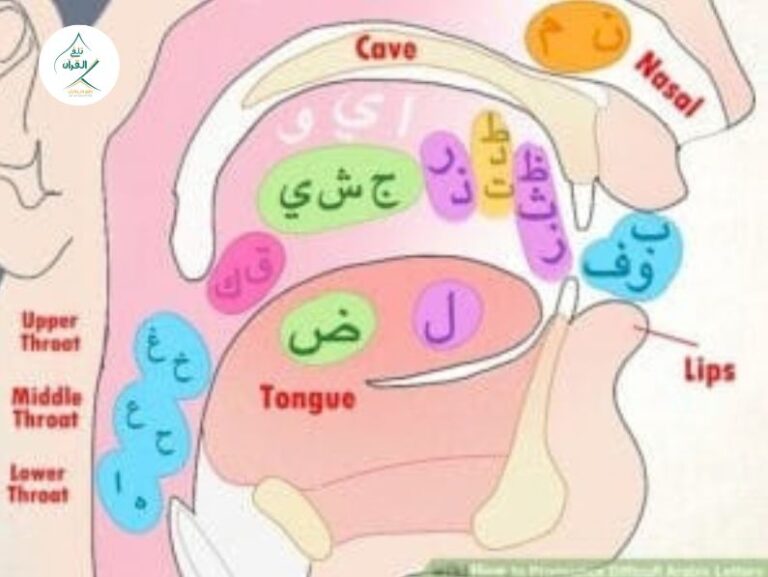
Live 1-on-1 Interactive Classrooms: Private sessions that grant you undivided attention to correct complex Arabic phonetic markers that do not exist in Western languages (such as the letters Ayn, Dhad, and Haa).
-
Certified Native Instructors: A premier tier of language coaches with extensive experience in transforming formal Arabic into an approachable, beloved, and engaging tongue for children and adults alike.
-
Total Scheduling Fluidity: Fully customizable tracks that adapt to your specific time zone and personal obligations, protecting you from learning dropouts and ensuring uninterrupted, compounding progress.
Conclusion: Your Tongue is Your Identity—Invest in Its Precision
For an expatriate, choosing to commit to learning Modern Standard Arabic is not an academic luxury; it is a profound strategic decision to protect your heritage, claim your cultural identity, and build a lasting professional and intellectual future. While local dialects offer a localized, temporary bridge for casual chat, Fusha hands you the master key to unlocking a vast world of civilizational depth, professional distinction, and scriptural mastery.
Take the definitive step forward today. Choose a live, interactive learning environment tailored to your lifestyle, and remember that achieving true Arabic fluency in the diaspora is built entirely on clear vision, expert guidance, and daily, undisrupted consistency.