
The Arabic language stands as one of the most profound, rich, and historically influential languages in human civilization. As the language of the Holy Quran and the cornerstone of Islamic heritage, it attracts millions of eager learners worldwide. However, embarking on the journey of learning Arabic often presents significant phonetic and linguistic hurdles. Among the most prominent obstacles are the challenges in pronouncing Arabic letters for non-native speakers, which can lead to frustration or compromise the accuracy of Quranic recitation and textual comprehension.
In this comprehensive we dive deep into the unique phonological architecture of Arabic, analyze the scientific causes behind difficult sounds, and provide systematic, practical strategies to master Arabic articulation. Furthermore, we highlight how the Talaqqi Al-Quran app offers custom interactive solutions powered by elite teachers certified with a connected Sanad (unbroken chain of transmission to Prophet Muhammad ﷺ).
Why is the Arabic Phonetic System Truly Unique?
Arabic possesses a highly structured and precise phonological system that engages the human respiratory and vocal apparatus unlike most Indo-European or Asian languages. According to the UNESCO World Arabic Language Portal, Arabic is one of the world’s most widely spoken and morphologically systematic languages, serving as a primary medium of communication and religious devotion for over 400 million people.
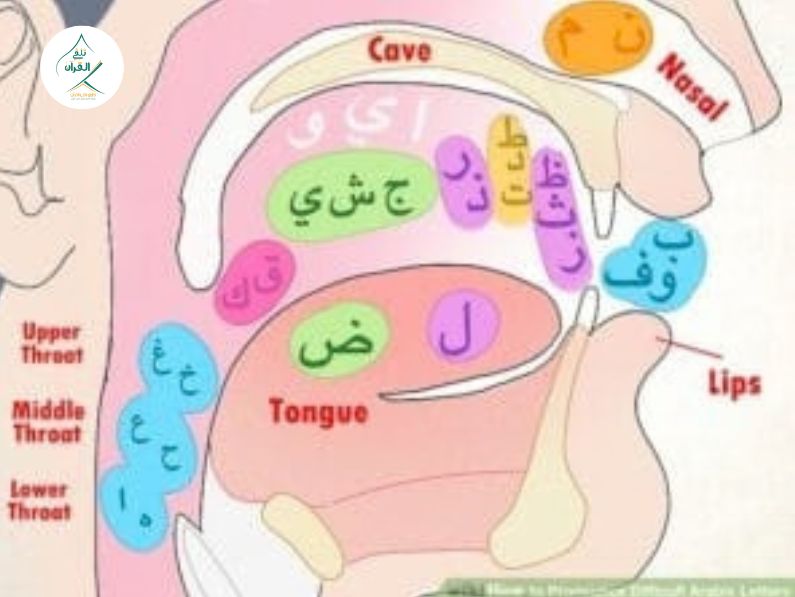
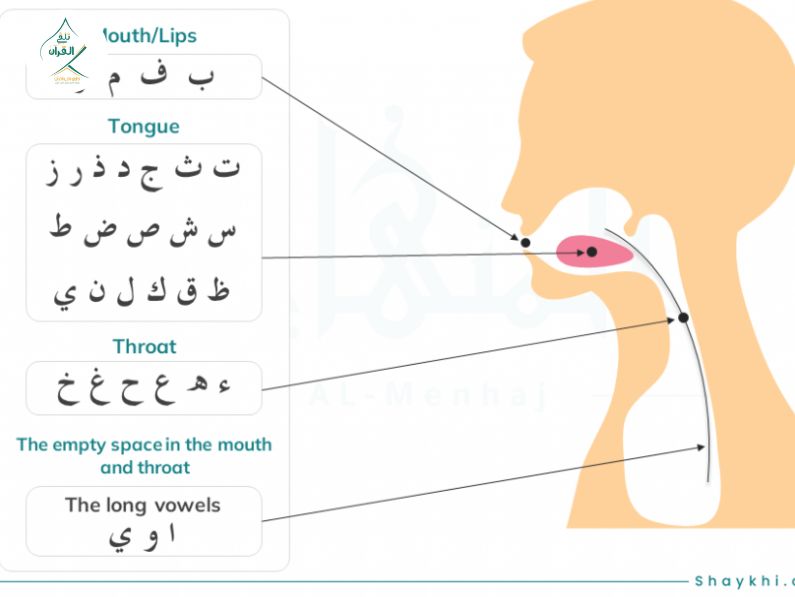
The uniqueness of Arabic lies in the vast anatomical span of its articulation points (Makharij al-Huruf), extending from the lips all the way down to the deepest part of the throat (the lower respiratory tract). This wide range forces the human vocal tract to operate at full capacity. As documented in the Journal of the International Phonetic Association, Arabic phonology includes rare consonant categories such as pharyngealized and emphatic sounds—the exact root cause behind the primary challenges in pronouncing Arabic letters for non-native speakers.
Top 5 Challenges in Pronouncing Arabic Letters for Non-Native Speakers (Linguistic Analysis)
When non-native students begin learning Arabic, their auditory system and facial muscles naturally attempt to map new, unfamiliar sounds onto the nearest equivalent phonemes in their native language (L1 Interference). This phonetic substitution results in recurring pronunciation errors. Here is a detailed breakdown of these top five obstacles:
1. Pharyngeal and Guttural Consonants (الحروف الحلقية)
This group includes six distinct throat letters: Ain (ع), Ha (ح), Ghain (غ), Kha (خ), Hamzah (ء), and Ha (هـ).
-
The Challenge of Ain (ع): The letter Ain is considered one of the hardest Arabic sounds because it originates from the middle throat (epiglottis) by constricting the pharyngeal muscles. Non-native speakers frequently substitute it with a simple glottal stop (Hamzah/A), altering the meaning of words like Aleem (عَلِيم – All-Knowing) to Aleem (أَلِيم – Painful).
-
The Challenge of Ha (ح): Produced in the middle throat through smooth friction without vocal cord vibration. Non-native learners often replace it with an English H (هـ) or a harsh Kha (خ), shifting the sacred word Al-Hamd (الْحَمْد – Praise) to Al-Khamd or Al-Hamd.
2. Emphatic vs. Plain Consonants (التفخيم والترقيق)
Arabic features pairs of consonants distinguished solely by “emphasis” (Velarization/Pharyngealization). Failing to emphasize the sound completely alters the vocabulary meaning:
-
Sad (ص) vs. Seen (س)
-
Dad (ض) vs. Dal (د)
-
Tah (ط) vs. Tah/Taa (ت)
-
Zah (ظ) vs. Thal (ذ)
Students facing challenges in pronouncing Arabic letters for non-native speakers struggle to raise the back of the tongue toward the soft palate while narrowing the pharynx. Consequently, they pronounce Taab (طَابَ – It became good) as Taab (تَابَ – He repented), or Sayf (صَيْف – Summer) as Sayf (سَيْف – Sword).
Plain / Muraqqaq Sound (Normal)   <--->   Emphatic / Mufakhgham Sound
       Taa / ت (T)               <--->           Tah / ط (T-Emphatic)
      Seen / س (S)               <--->           Sad / ص (S-Emphatic)
       Dal / د (D)               <--->           Dad / ض (D-Emphatic)
3. The Letter Dad (ض) – The “Language of Dad” Challenge
Arabic is proudly nicknamed “The Language of Dad” (Lughat Al-Dad) due to the absolute uniqueness of this phoneme. Dad is produced by pressing the lateral edge (or both edges) of the tongue against the upper molars. Because this complex articulation point does not exist in almost any other language, premier institutions such as the King Salman Global Academy for Arabic Language produce specialized training frameworks for non-Arabs. Without live guidance, most learners wrongly substitute it with a standard English D, Z, or Zah (ظ).
4. Short Vowels vs. Long Vowels (Madd Duration)
In many Western languages, lengthening a vowel modifies stress or accent without necessarily changing the fundamental definition of the word. In Arabic, however, vowel duration is governed by strict rules:
-
Fatha (Short) vs. Alif Madd (Long): Kataba (كَتَبَ – He wrote) vs. Kaataba (كَاتَبَ – He corresponded).
-
Dammah (Short) vs. Waw Madd (Long): Sumi’a (سُمِعَ – It was heard) vs. Soomiha (سُومِحَ – He was forgiven).
-
Kasrah (Short) vs. Yaa Madd (Long): Alima (عَلِمَ – He knew) vs. Aleem (عَلِيم – All-Knowing).
Improper duration control represents a major hurdle among the challenges in pronouncing Arabic letters for non-native speakers during Quranic recitation (Tajweed).
5. Gemination (Shaddah) and Consonant Clusters
A geminated letter (Shaddah) in Arabic represents two identical consonants merged together: the first is silent (Sakin), and the second is vocalized (Mutaharrik). Non-native students often fail to give the doubled letter its proper weight and duration (Gemination), pronouncing Darrasa (دَرَّسَ – He taught) with the exact same speed as Darasa (دَرَسَ – He studied), causing structural and grammatical disruption.
Impact of Mispronunciation on Word Meanings in Arabic
The severity of phonetic substitution becomes evident when examining how a minor error in articulation completely corrupts the intended meaning of Quranic verses and daily conversation:
| Correct Letter | Common Substitution | Correct Word | Correct Meaning | Mispronounced Word | Altered / Corrupted Meaning |
| Ha (ح) | Replacing with Ha (هـ) | Al-Rahman (الرَّحْمَن) | The Most Gracious (Name of Allah) | Al-Rahman (الرَّهْمَن) | Meaningless / Distortion |
| Ain (ع) | Replacing with Hamzah (ء) | Aleem (عَلِيم) | All-Knowing / Omniscient | Aleem (أَلِيم) | Painful / Severe |
| Tah (ط) | Softening to Taa (ت) | Al-Teen (الطِّين) | Clay / Soil | Al-Teen (التِّين) | The Fig Fruit |
| Sad (ص) | Softening to Seen (س) | Israr (إِصْرَار) | Determination / Persistence | Israr (إِسْرَار) | Secrecy / Hiding |
| Dad (ض) | Replacing with Dal (د) | Al-Dallin (الضَّالِّين) | Those who go astray | Al-Dallin (الدَّالِّين) | Guides / Indicators |
Systematic Strategies to Overcome Pronunciation Difficulties for Non-Native Speakers
Overcoming the challenges in pronouncing Arabic letters for non-native speakers requires transitioning from passive learning to a structured, sensory-based pedagogical approach. Educational experts at ICESCO (Islamic World Educational, Scientific and Cultural Organization) recommend focusing on direct phonetic skill-building through these four core steps:
1. Active Listening and Oral Mimicry (Mushafaha)
The ear is the primary gateway to accurate speech production. A student cannot produce a sound correctly if they have not heard it accurately hundreds of times. Learners must be exposed to clear, slow recitations (Tartil) to build precise auditory mental models before attempting vocal production.
2. Anatomical Mouth Mapping & Articulation Awareness
Understanding the exact physical origin of each sound provides students with a clear operational manual for their vocal apparatus:
-
Where should the tongue be placed? (Against the upper teeth, hard palate, or molars?)
-
Are the lips rounded or neutral?
-
Is air flowing through the nasal cavity (Khaishoom) or oral cavity?
When a student realizes that Tah (ط) shares the exact same tongue tip placement as Taa (ت)—differing only in raising the back of the tongue (Isti’laa)—mastering emphasis becomes a manageable physical exercise.
3. Adopting Foundational Phonetic Curricula (Al-Qaida Al-Nuraniyya & Noor Al-Bayan)
Foundational methodologies like Al-Qaida Al-Nuraniyya and Noor Al-Bayan have proven exceptionally effective for non-native speakers and children. Instead of forcing students to read full words immediately, these systems break down language into modular phonetic components: (Letter -> Short Vowel -> Long Vowel -> Sukoon -> Shaddah), allowing the mind to decode and articulate Arabic texts with ease.
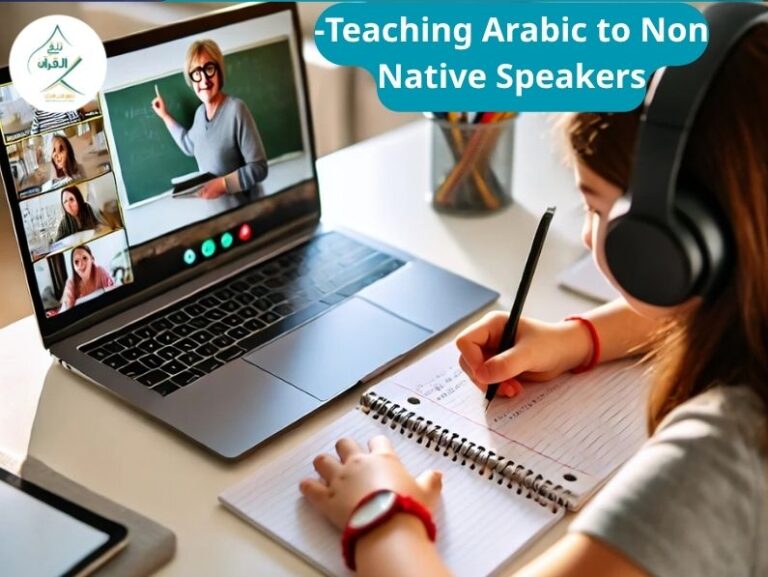
4. Real-Time Feedback from a Certified Live Teacher (1-on-1 Instruction)
Practicing with pre-recorded videos or automated silent apps is insufficient because students often mispronounce a letter while mistakenly believing they got it right! Live 1-on-1 instruction provides instant feedback: a certified teacher listens, observes lip movement, and corrects the vocal placement immediately, preventing the formation of bad muscle memory.
To explore further technical research on Arabic acoustic phonetics, review the comprehensive resources cataloged at SIL International.
See also
- Does Your Child Speak a Foreign Language? How to Build Their Quran Reading Skills and Arabic Comprehension Interactively from Home
- The Best Curriculums and Books for Teaching Arabic to Non-Native Speakers
- How Non-Native Speakers Can Learn Modern Standard Arabic Correctly and Quickly
- The Difference Between Learning Modern Standard Arabic and Colloquial Dialects for Expats
How “Talaqqi Al-Quran App” Solves Pronunciation Obstacles for Non-Arabs
Modern technology reaches its highest purpose when harnessed to serve the Quran and Arabic language. The Talaqqi Al-Quran app is a premier interactive digital platform specifically engineered to eliminate all challenges in pronouncing Arabic letters for non-native speakers, combining authentic traditional oral transmission (Talaqqi) with cutting-edge mobile convenience.
Key Features of Talaqqi Al-Quran for Non-Native Learners:
-
Dedicated Arabic & Quran Programs for Non-Native Speakers:
The app features tailored learning tracks designed step-by-step for non-Arabic speakers, including full courses on Al-Qaida Al-Nuraniyya and Noor Al-Bayan to build accurate articulation points from day one.
-
Elite Ijazah-Certified Male and Female Teachers:
Every tutor on the platform holds an authentic Ijazah with an unbroken Sanad linked to Prophet Muhammad ﷺ. Furthermore, tutors are fluent in English and other international languages, allowing them to explain complex phonetic concepts smoothly to non-Arab students.
-
Live 1-on-1 Interactive Video Sessions:
Learning on Talaqqi Al-Quran is active, live, and personal. Tutors observe the student’s lip movements and air pressure via high-definition video, adjusting vocal nuance, emphasis (Tafkhim), and softening (Tarqiq) in real time.
-
Maximum Flexibility & Cost-Effective Plans:
Talaqqi Al-Quran offers customizable subscription tiers suited for busy professionals, children, and women, complete with monthly progress reports:
-
Talaqqi Starter Plan: 180 Minutes (3 Hours) — $30 USD / 30 Days
-
Basic Plan: 300 Minutes (5 Hours) — $45 USD / 30 Days
-
Hifz (Memorization) Plan: 560 Minutes (9 Hours) — $78 USD / 30 Days
-
Launch Plan: 1,200 Minutes (20 Hours) — $119 USD / 60 Days
-
Unlimited Plan: Unlimited Minutes — $114 USD / 30 Days
🎉 Special Limited-Time Discount: Start your journey to flawless Arabic pronunciation today! Apply promo code talaqi25 at checkout to claim an instant 10% discount on all packages!
Related Articles & Learning Resources
-
Time Management for Students: How to Utilize Commute and Waiting Time for Quran Review?
-
Quranic Progress Tracking: How to Be a Partner in Your Child’s Success with Talaqqi?
-
Transforming Screen Time into Value: Harnessing Smart Devices for Quranic Education
-
Modern Motivational Techniques: How We Inspire the Digital Generation to Love the Quran
-
Preparing Children for School: Transitioning from Play to Discipline for Classes and Circles
Comparison: Self-Study Apps vs. Live 1-on-1 Learning with Talaqqi Al-Quran
| Feature / Metric | Automated Silent Apps & Recordings | Live 1-on-1 via Talaqqi Al-Quran App |
| Articulation Correction | None (Audio playback only without real-time evaluation) | Instant, live correction of tongue and lip mechanics |
| Customization for Native Language | One-size-fits-all generic format | Customized plan targeting specific L1 phonetic errors |
| Sanad & Ijazah Certification | Not available | Elite tutors with connected Sanad to the Prophet ﷺ |
| Accountability & Consistency | High drop-out rates due to lack of engagement | Structured tracking & progress reports that motivate |
| Human Connection | Cold, automated algorithm | Safe, supportive, and inspiring live interaction |
Step-by-Step: How to Start Overcoming Challenges in Pronouncing Arabic Letters
If you live in Western countries, or have children growing up in non-Arabic speaking communities and wish to protect their Arabic identity and Quranic recitation, getting started is simple:
-
Download the App:
-
Android Users: Download on [Google Play Store].
-
iOS Users: Download on [Apple App Store].
-
-
Register for a Free Trial Session: Claim a 100% free evaluation class to assess your articulation points with a certified teacher.
-
Select Your Teacher & Preferred Schedule: Choose flexible timings that fit your calendar, with dedicated male or female tutors available for adults and children.
-
Apply Promo Code: Enter code
talaqi25during checkout to enjoy a 10% discount across any plan.
Frequently Asked Questions (FAQ)
Q1: How long does it take for a non-native speaker to overcome major pronunciation challenges?
While individual progress varies based on practice, students taking 2 to 3 live sessions weekly on the Talaqqi Al-Quran app typically demonstrate noticeable improvement in difficult letters (such as Ain, Ha, and Dad) within 4 to 6 weeks, thanks to structured Qaida Nuraniyya training and direct feedback.
Q2: Can non-Arabic speaking children learn Tajweed without knowing complex Arabic grammar?
Yes, absolutely! Tajweed is primarily an auditory and practical skill (Mushafaha) rather than an abstract grammatical study. Non-native children naturally master rules like Idgham, Ghunnah, and Madd through direct imitation and repetition with an Ijazah-certified teacher long before studying formal grammar.
Q3: Does Talaqqi Al-Quran provide qualified female tutors for women and young children?
Yes. Talaqqi Al-Quran offers complete freedom to choose highly qualified, Ijazah-certified female teachers for female students and young kids, ensuring a comfortable, encouraging, and safe online learning environment 24/7.
Conclusion: Your Path to Flawless Recitation Begins Today
Overcoming the challenges in pronouncing Arabic letters for non-native speakers is far from impossible—it is a deeply rewarding spiritual and linguistic journey. With sincere commitment, proper methodology, and an expert tutor guiding you step by step, every sound can be mastered.
No matter your current level or phonetic background, the doors to Quranic fluency are open. Let the words of Allah flow from your tongue with beauty, clarity, and precision. Take your first step today with the Talaqqi Al-Quran app.
👉 Download the Talaqqi Al-Quran App Now: